


Federative Republic of Brazil

-
It is part of MERCOSUR (common market in the south of the South American continent).
-
5,568 cities with a population of 210 million inhabitants.
-
Chemical, petroleum, mineral exploration industries, as well asautomobile, aeronautics and agriculture highly developed.
-
Fast growing service sector.
-
It has one of the highest nominal GDPs in the world.
-
The second largest fleet of private jets and helicopters in the world
-
Extensive network of roads and airports throughout the country.
-
More than 7 thousand km of coastline along the Atlantic Ocean.
INFRASTRUCTURES
POTENTIALITIES, DEMANDS AND OPPORTUNITIES IN BRAZIL
With regard to the country's national infrastructure, we can see that Brazil has 2,463 airports and airfields registered by ANAC (National Civil Aviation Agency), 1,806 of which are private and 657 are public. According to ANTAQ, Brazil has 239 port facilities, public and private, both maritime and fluvial.
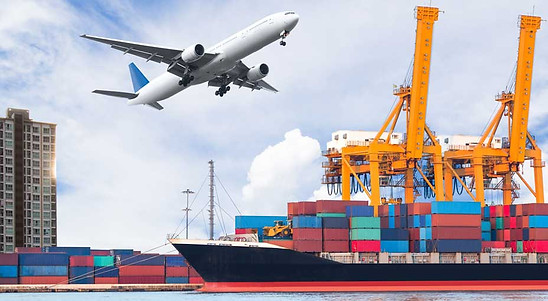
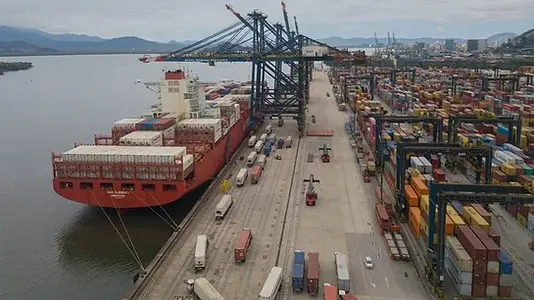
In addition to 380 port terminals, 210 of which are for private use (TUP), located in private ports and 170 leased terminals in organized ports (public ports), through which 95% of Brazilian exports pass, totaling US$ 220 billion in 2019.

Currently, out of a total of 1,720,700 km of roads, 213,453 km (12.4%) are paved and 1,349,938 km (78.5%) are unpaved. Among the paved highways, 30.6% are federal and 69.4% are state (CNT, 2019). The federal road network in Brazil currently has a total length of 75.8 thousand km, of which 65.4 thousand km correspond to paved roads and 10.4 thousand km correspond to highways.

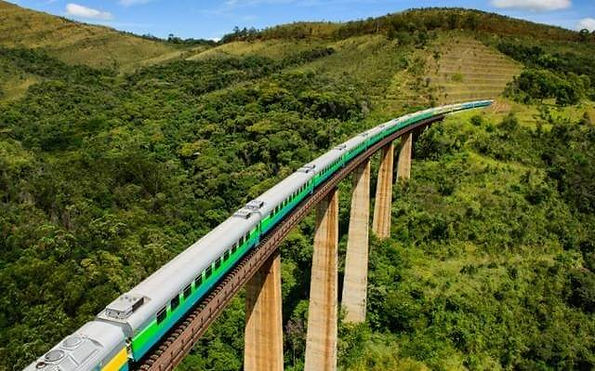
In 2021, the Brazilian freight rail sector handled 506.8 million useful tons (TU). According to ANTT, in more than two decades of concessions, those associated with ANTF showed a growth of 100.1% in the movement of cargo by railroads, in relation to 1997 — the time when the concessions began (average annual growth of 2. 93%).
Since the beginning of the concessions and until December 2021, the railroads have already invested more than BRL 141.9 billion. These funds were mainly allocated to improving and recovering the network, purchasing and renovating rolling stock, and acquiring new technologies, professional training, qualification of operations, among other areas. Thus, in 1997, the railroads had 1,154 locomotives; in 2021, there are already 3,297 units, representing an increase of 186%. In the same period, the number of wagons increased from 43,816 to 114,974 — an increase of 162%.
The number of jobs in the sector (between direct and indirect) has grown by 209% since 1997: it went from 13,506 (in that year) to 41,744 in 2021.